

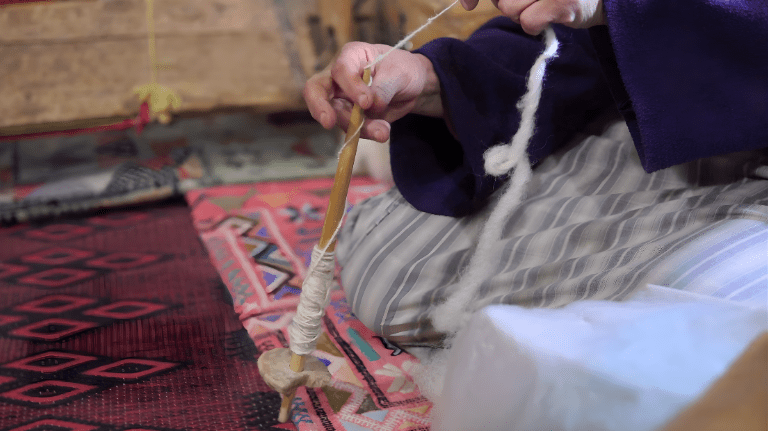
Our partner artisans: how is a handmade Berber rug born at Decoecoart?
At Decoecoart, a Berber rug is not a standard decorative object. It is a handmade piece, crafted with a living material, precise techniques, and real production time. In this guide, you will understand how a Berber rug is born, what we check before shipping, and how to avoid the most frequent mistakes when choosing one.
Looking for a handmade Berber rug in natural wool, ready to transform your living room or bedroom
Quick summary
- A handmade Berber rug follows a complete cycle: wool, spinning, weaving or knotting, finishing, washing, drying
- Handmade items accept slight variations: texture, lines, fringes, dimensions, color shades
- The 3 most frequent questions before purchase: fiber shedding, wool odor upon unpacking, daily maintenance
Why our partner artisans make the difference
The real difference in a Berber rug lies in the details. With an industrial rug, everything is uniform and “copied.” With a handmade rug, the result is vibrant. The wool catches the light, the texture varies subtly, and the finishes tell the story of the handiwork. Our partner artisans work on looms with a simple requirement: a rug that is solid, comfortable, and made to last.
Our role, at Decoecoart, is to select consistent pieces, present real photos of each rug, and remain transparent about the material. Depending on the model, some rugs may contain pure wool, while others may incorporate cotton in the base. The main thing is that this is clearly indicated and that the final result meets your expectations.
Useful micro-proof before purchase
- Unique pieces: each rug is presented as it is, with its true colors and true details
- Transparent materials: the composition is indicated on the product sheet, depending on the piece
- Final inspection: we check the dimensions, edges, fringes, and general condition before shipping
Simple advice: if you want a calm and timeless look, choose a Beni Ouarain style. If you want an artistic and more expressive touch, look towards an Azilal.
How is a handmade Berber rug born: the complete steps?
1 The wool: the basis for comfort and texture
Everything begins with the wool. It is what provides softness, volume, and presence underfoot. Good wool offers a pleasant feel and better durability over time. It also influences the final appearance: a rug can seem more “plush” or more “structured” depending on the fiber and how the yarn has been prepared.
2 Preparation and cleaning
The wool is sorted and then prepared for working. This step is essential for obtaining a more stable yarn. It also contributes to the final appearance of the rug, as well-prepared wool yields a neater result and reduces visible defects once the rug is finished.
3 Spinning
Spinning transforms the material into yarn. In traditional crafts, the yarn can be slightly irregular, and this is often what gives it that vibrant quality not found in industrial pieces. A more regular yarn will give a “cleaner” look, while a more textured yarn will give a rawer, more authentic charm.
4 Dyeing according to style
For colored rugs, the next step is dyeing. For more sober models, we sometimes keep natural tones. In any case, the idea is to obtain harmonious colors. Slight nuances are normal in a handcrafted piece and often contribute to the beauty of the rug in natural light.
5 Setting up the loom
The base is stretched on the loom. Tension is a key point because it influences the regularity of the work and the strength of the edges. Good tension helps achieve a more stable, durable piece that is visually more pleasant once placed on the floor.
6 Weaving or knotting: the heart of the work
Row after row, the rug takes shape. Knotting creates a thicker, softer texture, while flat weaving provides a finer, more structured surface. This is the longest part, the one that requires the most patience and precision, and it is also what explains the value of a true handmade rug.
7 Finishing
The finishes provide the final look: edges, fringes, adjustments, and evening out the texture according to the style. A clean finish changes everything, as it makes the rug look neater and more solid in the long term. In a handcrafted piece, small variations may exist, but the whole must remain consistent.
8 Final washing and drying
The final wash removes some surface fibers and reveals the rug's texture. Drying provides the final look. This is also a step that can highlight the beauty of the wool, especially when the rug is placed in a bright room.
Our quality check-list before shipping
Before a rug reaches your home, we check simple but essential points. The goal is for you to receive a piece that is faithful to the photos, pleasant to live with, and ready to integrate naturally into your interior.
- Dimensions consistent with the product sheet, including fringes if announced
- Edges clean, without visible deformation
- Texture homogeneous, without abnormal areas
- Fringes solid, with neat finishes
- Overall look consistent with the product photos
The most important rule: choose the size first, then the style.
FAQ: clear answers to the most frequent questions
Is it normal for a wool rug to shed fibers at the beginning?
Yes. On a new rug made of natural wool, the surface may release fibers at first. Vacuum on a gentle setting, without an aggressive brush, and the shedding will gradually decrease over time. In a high-traffic living room, this may last a little longer, but it will stabilize.
Does my rug smell like wool upon opening?
This is common. A natural material can retain a slight odor after transport. Air it out in a dry room for 24 to 72 hours. Avoid unnecessarily dampening the rug. The odor usually diminishes quickly, especially if the room is well-ventilated.
How to clean a stain without damaging the wool?
Blot immediately with a clean, slightly damp cloth, then dry. Do not rub aggressively; this can spread the stain and damage the fibers. For a significant stain, professional cleaning suitable for wool remains the safest solution.
Vacuum with or without a rotating brush?
At first, avoid the rotating brush if it is aggressive, especially on a highly textured rug. Regular vacuuming on a gentle setting is sufficient. Vacuum slowly, and in the direction of the pile. This also helps limit shedding over the weeks.
Why is the size not perfect to the centimeter?
Because it is handmade. A small variation of a few centimeters is normal, especially with artisanal pieces. It is an indicator that the piece is not mass-produced. The important thing is the general balance and the look once it is placed on the floor.
Is it suitable for modern interiors?
Yes. Natural wool and Berber patterns pair very well with wood, light-colored walls, linen, and Scandinavian, Japandi, minimalist, or Haussmann-style decor. The secret is to choose a size that structures the room and a palette consistent with your furniture.
Discover our collections
- Beni Ouarain rugs for a sober, bright, and timeless look
- Azilal rugs for an artistic and more expressive touch
- Zanafi rugs for a more graphic woven texture
Ready to choose your piece
Conclusion
A handmade Berber rug is a living piece. It stabilizes, develops a patina, and gains character. By understanding the manufacturing steps, you know what to look for, what to expect, and how to maintain your rug so that it stays beautiful for a long time. If you want a unique, warm, and durable piece, handmade is the obvious choice.